

By Industry Tech Correspondent
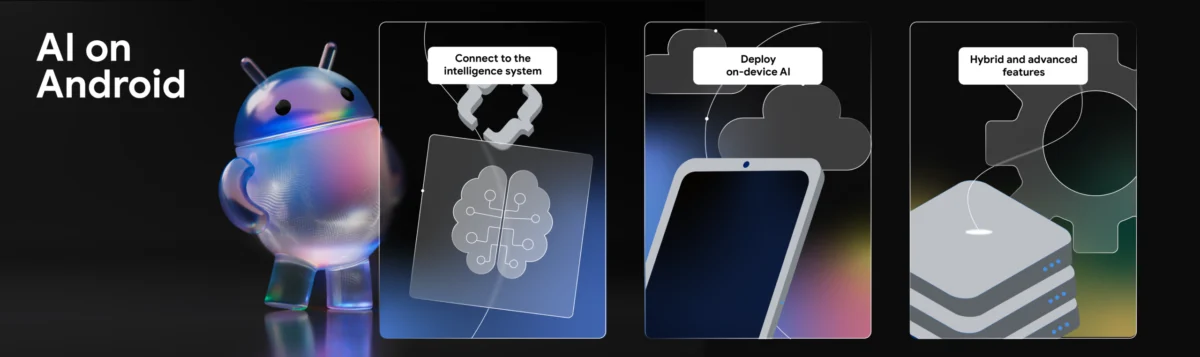
At Google I/O 2026, the tech giant signaled a definitive pivot in its mobile strategy: Android is no longer merely an operating system; it is evolving into a comprehensive "intelligence system." This fundamental architectural shift aims to blur the lines between human intent, third-party application functionality, and system-level automation. By embedding deep, agentic capabilities directly into the fabric of the OS, Google is inviting developers to move beyond traditional app design and embrace a future where software acts on behalf of the user.
Main Facts: The New Android Paradigm
The core of this transformation rests on the belief that the future of mobile interaction is agentic. Instead of users manually navigating through menus, screens, and forms, AI agents like Gemini will increasingly act as intermediaries, executing tasks across multiple applications seamlessly.
To facilitate this, Google has introduced several key pillars:
- AppFunctions (Android MCP): A new platform API and Jetpack library currently in experimental preview, designed to give developers granular control over how their applications integrate with Android’s system-level intelligence.
- Gemini Nano 4: The latest iteration of Google’s on-device foundation models, providing unprecedented local processing power.
- Hybrid Inference Frameworks: A strategic approach that balances on-device privacy and speed with cloud-based computational depth, allowing developers to choose the optimal path for their specific use cases.
- Expanded Tooling: New ML Kit GenAI APIs and LiteRT-LM support, allowing developers to bring fine-tuned, custom Small Language Models (SLMs) directly to the edge.
Chronology: The Road to I/O 2026
The journey toward an "Intelligence System" has been a deliberate, multi-year progression for the Android team:
- Pre-2025: Android focused on "on-device ML" via libraries like TensorFlow Lite, emphasizing efficiency and privacy.
- Early 2026 (The Gemma Launch): Last month, Google debuted Gemma 4, marking a turning point in the accessibility of state-of-the-art open models. This set the stage for developers to experiment with high-performance, local agentic intelligence.
- Google I/O 2026 (The Reveal): During the event, Jingyu Shi and the Android developer relations team officially unveiled the transition. They demonstrated how the OS can now navigate apps on behalf of users, a major leap from traditional voice commands.
- Current Phase: The launch of the AppFunctions Early Access Program and the AIcore developer preview indicates that Google is now aggressively moving these technologies from the lab to the production environment.
Supporting Data: The Technical Architecture
To understand the scale of this shift, one must look at the technical implementation. Android’s new architecture isn’t just a UI layer; it is a fundamental reconfiguration of how apps communicate with the system.
The Power of AppFunctions
AppFunctions act as a bridge. By utilizing the Model Context Protocol (MCP), developers can expose specific internal functions of their apps to the Gemini engine. This means an AI can now understand the intent behind a request—such as "order me a coffee from my favorite cafe"—and trigger the specific app functions required to complete that task without the user ever opening the app interface.
On-Device Capabilities with Nano 4
The move to Gemini Nano 4 is significant because it addresses the "latency vs. privacy" trade-off. With the AIcore developer preview, developers can run sophisticated generative models entirely on the user’s silicon. This ensures that personal user data—which might be sensitive—never leaves the device, providing a "privacy-first" guarantee that is increasingly demanded by both consumers and regulators.
Customization via LiteRT-LM
Google recognizes that one size does not fit all. Through LiteRT-LM, developers are no longer forced to rely solely on Google’s foundation models. If a developer has a niche use case—such as medical diagnostics, legal document analysis, or specialized engineering workflows—they can now fine-tune a small language model and deploy it locally, leveraging the hardware acceleration of the Android device.

Official Responses and Developer Integration
In his address at the conference, Jingyu Shi emphasized that this is a collaborative effort. "We are moving from an era of ‘apps as silos’ to ‘apps as agents,’" he noted. The goal is to lower the barrier to entry for developers who want to incorporate high-end AI without needing a PhD in machine learning.
Google’s Early Access Program for AppFunctions is already seeing significant traction. By allowing early adopters to deploy these functions into production environments, Google is gathering real-world telemetry to refine the API before a broader, stable release. The company has also released a comprehensive suite of video guides and code samples via the Android AI Hub, aiming to shorten the learning curve for the global developer community.
Implications: The Future of the App Economy
The shift from an OS to an "Intelligence System" has profound implications for the mobile ecosystem:
1. The Death of the "App-Centric" UI
For over a decade, app success has been measured by engagement metrics—how long a user spends in an app. In an agentic future, the best app might be the one that the user never actually opens. If an AI agent can perform tasks in the background, developers will need to shift their focus from "UI design" to "API accessibility." The value will lie in how well an app can communicate with the OS to fulfill a user’s intent.
2. A New Standard for Privacy
By pushing more inference to the edge (on-device), Android is positioning itself as the privacy-safe alternative to cloud-only AI solutions. This is a strategic competitive advantage against platforms that rely heavily on server-side processing, which carries higher risks of data leakage and latency.
3. Democratization of AI
By providing tools like the ML Kit GenAI APIs and LiteRT-LM, Google is effectively commoditizing high-end AI capabilities. Small startups now have the potential to build features that were previously only possible for tech giants with massive server farms. This will likely spark a new wave of innovation, where localized, highly specific "micro-agents" handle specialized tasks with human-level accuracy.
4. The Challenge of Discovery
As apps become "functions" accessed by an AI, the traditional "App Store" discovery model faces a crisis. If the AI is doing the work, how will users find the developers behind the services? Google will likely need to evolve its search and discovery algorithms to ensure that while the AI acts, the developers behind the functions still receive the recognition and monetization they require to sustain their businesses.
Conclusion
Android’s transition to an intelligence system is the most significant change to the platform since its inception. By enabling developers to build apps that function as intelligent, autonomous agents, Google is setting the stage for a mobile experience that is more predictive, more efficient, and deeply integrated into the user’s daily life.
For the development community, the message is clear: the time to experiment is now. Whether by joining the AppFunctions Early Access Program or exploring the capabilities of Gemini Nano 4, the future of mobile development is no longer about building screens—it is about building intelligence. The developers who embrace this shift will be the architects of the next generation of digital interaction.
